AI Business Automation NZ: Your Guide to Smarter Operations
When we talk about AI business automation in New Zealand, we're really just talking about using smart software to take over the boring, repetitive jobs that clog up your day. Think of it as a digital helping hand for Kiwi SMEs, freeing you and your team up to focus on what actually grows your business.
It’s no longer some futuristic tech reserved for the big players. Today, it’s a practical tool that local cafes, tradies, and professional services are using to get more done and keep their customers happy.
Why Kiwi SMEs Are Turning to AI Automation
Picture your favourite local cafe. What if it could automatically take online orders, track coffee bean stock, and manage table bookings all on its own? That would give the staff more time to perfect their flat whites and chat with the regulars. That’s the essence of AI automation.
But here’s the thing: a bit of a gap is starting to show. While New Zealand's larger companies are jumping on board – with 67% now using AI, up from 48% in 2023 – our SMEs are lagging. A recent report revealed that a staggering 68% of small to medium businesses have no immediate plans to bring AI into their operations.
With productivity being the number one goal for 29% of all Kiwi businesses, this isn't just a missed opportunity; it’s a risk. The real question isn’t if you need to automate, but where to start to get the biggest bang for your buck.
Closing the Gap With Smart Automation
For savvy Kiwi business owners, this gap is a huge opportunity. By embracing AI automation, smaller businesses can punch well above their weight, running with the slickness of a big corporate without the massive overheads. It’s all about levelling the playing field.
The idea is simple: find the jobs that soak up time and energy and let smart software handle them. We're talking about things like:
- Manually keying invoice data into Xero or MYOB.
- Answering the same customer queries over and over again via email.
- Chasing up quotes or overdue payments.
- Scheduling appointments and sending out reminders.
You can think of AI automation as the perfect digital team member. It works 24/7, doesn’t make typos, and frees up your real-life team to focus on the human stuff - building relationships, thinking strategically, and growing the business.
This map gives you a quick visual of how it all connects.
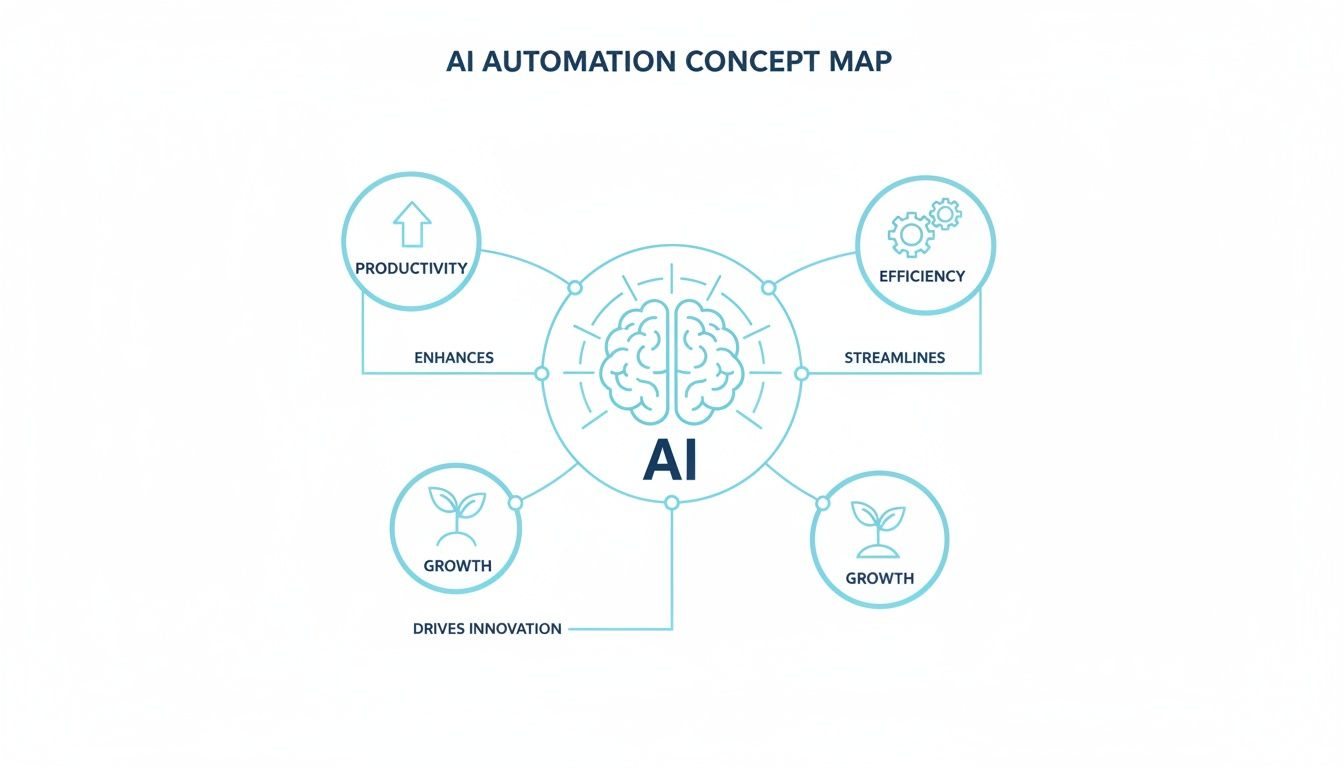
As you can see, AI isn't just about saving a bit of time; it's the engine that drives better productivity, smoother operations, and real, sustainable growth.
The best part? Getting started is easier than most people think. Even small changes today can lead to massive advantages down the line. You can learn more about the compound benefits of automation and why starting now is key.
Seeing AI Automation in Action Across New Zealand
It's one thing to talk about the theory of AI business automation, but it’s another to see how it actually helps everyday Kiwi companies. The true value really clicks when you get past the jargon and look at real-world scenarios where this tech is making a proper difference. These aren't just hypotheticals; they're grounded in the day-to-day reality of running a business right here in New Zealand.
Let’s walk through a few stories from different industries, from Auckland down to Christchurch, to show you the 'before and after' of bringing in smart automation. Each example tackles a common business headache and shows how a targeted solution can free up time, keep clients happy, and strengthen the bottom line.

Real Estate Leads Around the Clock in Auckland
Picture a busy real estate agency in Auckland. They're constantly getting online enquiries about rental properties, and a lot of them flood in after hours or over the weekend when no one's in the office.
Before Automation: Every enquiry would just pile up in a general inbox. A property manager would have to manually sift through them first thing on Monday morning. By that time, a motivated tenant could have easily booked a viewing with a competitor down the road. It was a classic case of lost leads and frustrated potential clients.
After Automation: The agency set up an AI Voice Agent. Now, when someone calls about a listing, the AI answers instantly, 24/7. It handles the basic questions, checks if the property is still available, and can even pre-qualify the caller against a few simple criteria.
Here’s a quick look at how it works:
- Instant Response: The AI Voice Agent picks up the call straight away and gets the caller's name and contact info.
- Lead Qualification: It then asks a few key questions, like, "When are you looking to move?" and "How many people will be living in the property?"
- Data Capture: All the answers are automatically logged in the agency's CRM system, creating a neat new lead profile.
- Team Notification: The right property manager gets an immediate notification with all the qualified lead's details, ready for a follow-up call.
The result is a system that literally never sleeps. Not a single lead gets missed, and the team starts their day with a list of warm, pre-qualified people to call, not a messy inbox to wade through. This simple workflow has completely changed their response times and boosted the number of viewings they book.
Streamlining Patient Care in a Christchurch Clinic
Let's head down south to a medical clinic in Christchurch. The front-desk team was always stretched thin, juggling ringing phones, checking in patients, and dealing with a mountain of paperwork. Manually typing up patient intake forms was a huge time-drain and, frankly, prone to mistakes.
Before Automation: New patients had to fill out paper forms in the waiting room. The receptionist then had to do their best to decipher the handwriting and punch every detail into the patient management software. This took them away from helping the people right in front of them and also raised the risk of data entry errors.
After Automation: The clinic brought in an AI-powered system for document processing and appointment scheduling. Now, when a patient books their first appointment, they're automatically sent a link to a secure digital intake form.
This shift from paper to digital isn't just about convenience. It’s about building a more efficient and accurate foundation for patient care, freeing up skilled medical staff to focus on health outcomes, not admin tasks.
The new workflow has made a massive difference to their operations:
- Automated Intake: Patients can fill out the form on their phone or computer before they even leave the house.
- Intelligent Data Extraction: The AI system instantly reads the submitted form, pulls out key information like name, date of birth, and medical history, and populates the patient's file.
- Reduced Workload: The front-desk team no longer has to do any manual data entry, so they can focus on giving patients a warm welcome and a smooth experience.
This one change saved the clinic an estimated 8-10 hours of admin work every single week. Even better, it ensured patient records were spot-on from day one, which ultimately improves the quality of care. For a similar take on this in the events industry, check out how AI chatbots manage bookings and enquiries effortlessly.
Unlocking Efficiency for a Wellington Law Firm
Finally, let’s pop over to a small law firm in the capital. The legal team spent a huge amount of time on large, complex documents like contracts and discovery files. Manually trawling through them to find specific clauses or client details was a painstaking job that ate up countless billable hours.
Before Automation: A junior lawyer or paralegal would have to read through hundreds of pages, just trying to find and pull out specific information. It was slow, inefficient, and came with the very real risk of missing a critical detail.
After Automation: The firm started using an AI Document Processing tool. Now, they can upload any PDF or scanned document, and the AI will analyse the entire thing in seconds.
The team can simply ask it questions in plain English, like, "What is the contract's termination date?" or "Summarise all clauses related to liability." The AI instantly finds and shows them the exact text they need, saving hours of tedious searching. This means they can prepare cases faster, get back to clients quicker, and handle a bigger caseload without burning out.
Finding Your First High-Impact Automation Project
Jumping into AI automation for your Kiwi business doesn't mean you have to rip everything out and start again. In fact, the smartest way to begin is by looking for the 'quick wins' - those simple, high-return tasks that give you an immediate payoff and build momentum for bigger projects. This approach takes the risk out of the equation and proves the value from day one.
The best place to start is by identifying the most frustrating, repetitive jobs that are slowing your team down. Think about the daily grind. Are you manually shifting data from your job management software into Xero? Maybe your team is burning hours chasing up quotes and invoices? These are the perfect candidates for your first automation project.
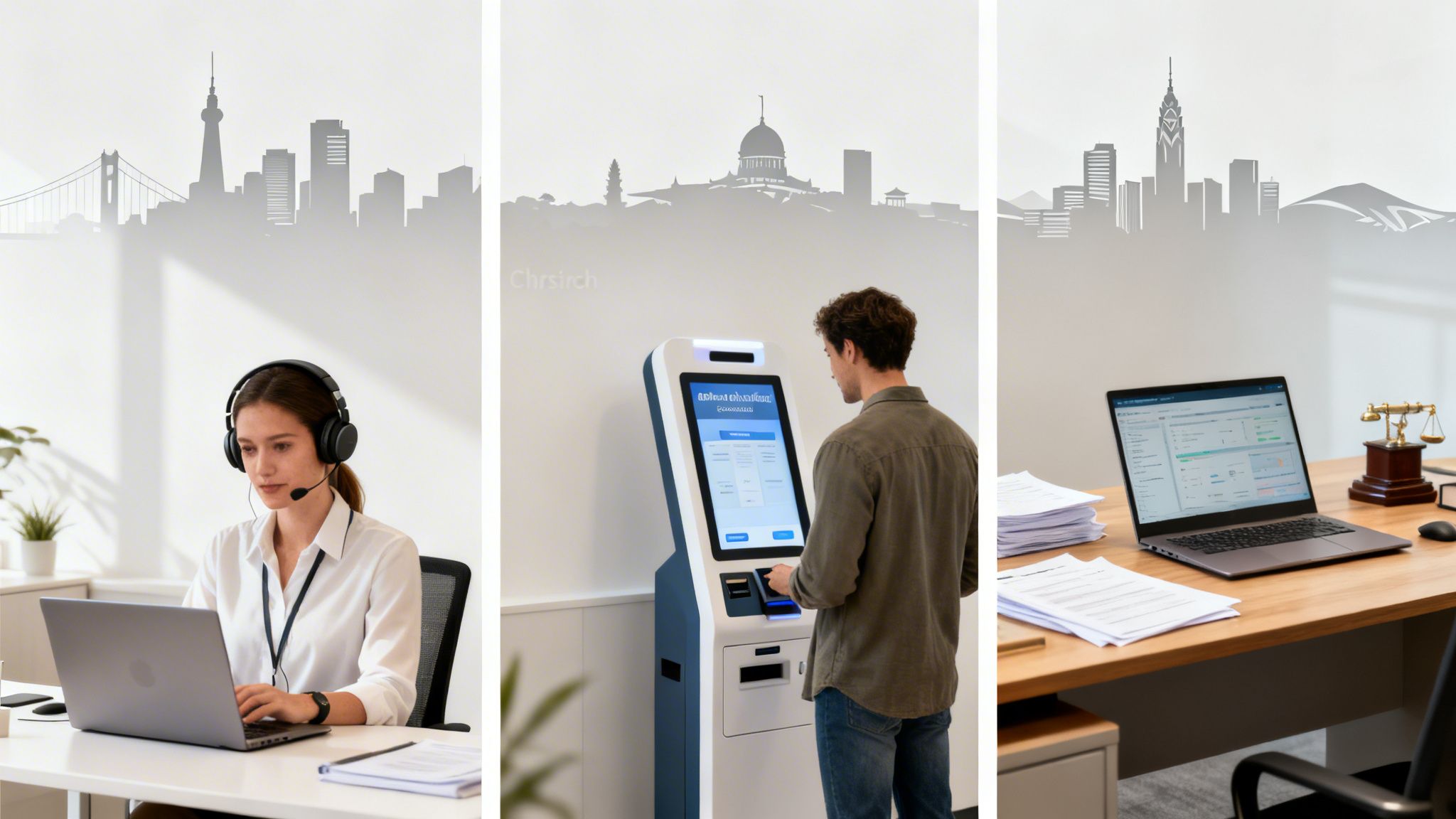
Spotting Your Quick-Win Opportunities
To find that perfect first project, hunt for tasks that are frequent, follow a clear set of rules, and are magnets for human error. These are the hidden goldmines of efficiency just waiting to be tapped. Often, this involves moving information between two different software systems that don’t naturally talk to each other.
For example, connecting your CRM like HubSpot to your accounting software like MYOB can instantly get rid of hours of double-handling data. This isn't just a time-saver; it makes your data more accurate, so your sales and finance teams are always on the same page. As you identify these opportunities, looking into specific marketing automation tools can often provide a clear path to getting tangible results, fast.
Other fantastic candidates for automation include:
- Repetitive Client Communication: Answering the same old questions about your hours, services, or pricing.
- Manual Data Entry: The classic copy-and-paste of client details, order info, or invoice numbers between different apps.
- Routine Follow-ups: Sending out reminder emails for appointments, unpaid invoices, or quotes that haven't been accepted.
- Basic Lead Qualification: Asking those initial screening questions to see if a new enquiry is a good fit before it takes up a salesperson's time.
By automating these jobs, you’re not trying to replace your team. You're giving them a superpower. You’re handing them back the time they need to focus on solving complex problems and building real relationships with customers - the stuff that actually grows your business. For a bit more help with this, you can also check out our guide on choosing which business processes to automate first.
The Discover, Build, Launch Method
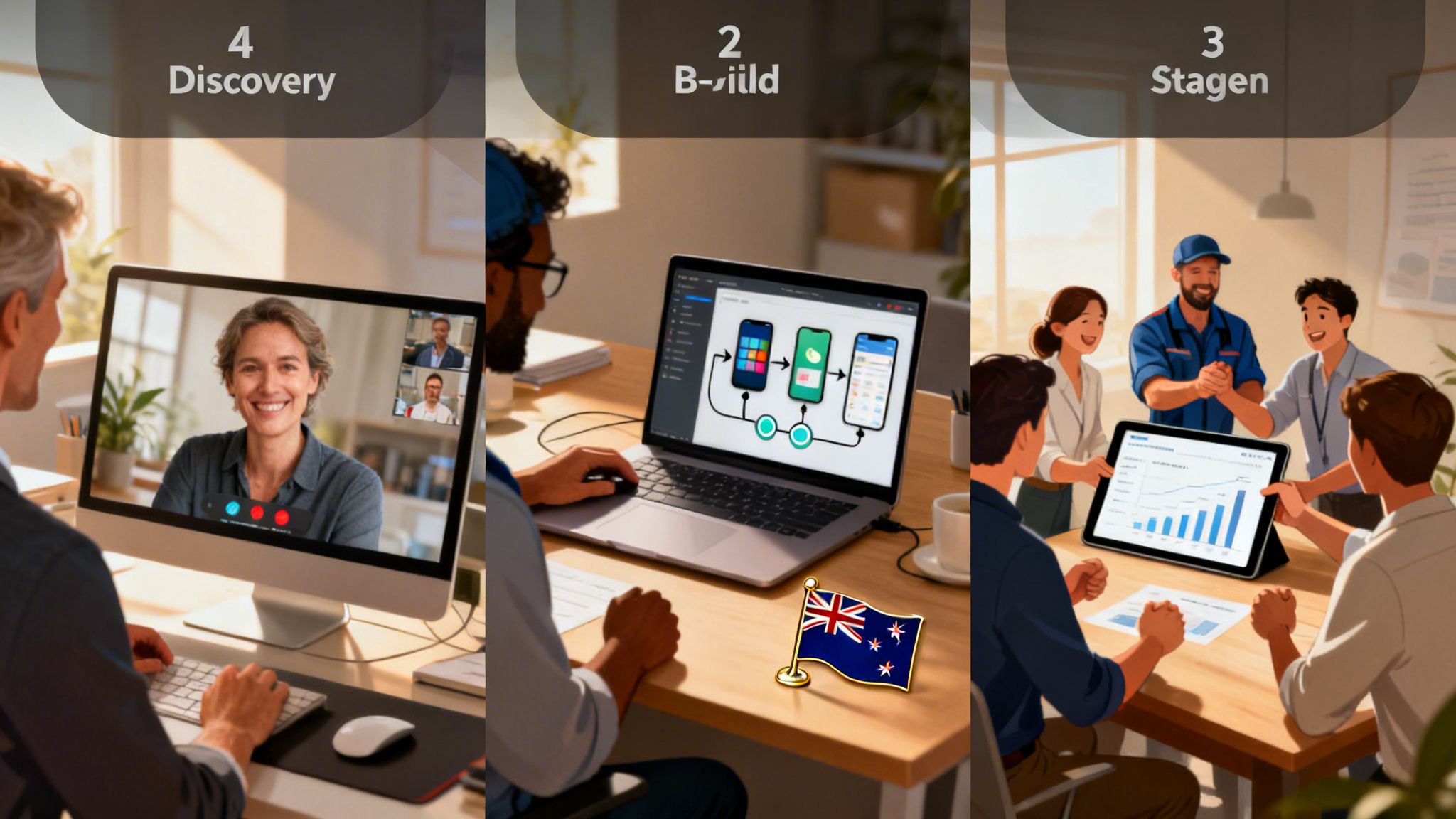
A simple but incredibly effective way to tackle your first project is what we call the 'discover, build, launch' method. This framework is all about making strategic, incremental improvements instead of attempting a massive, disruptive overhaul. It's about making the systems you already use smarter, not replacing them.
This breaks the whole process down into three straightforward steps:
- Discover: We sit down with you and map out a single, high-value process. We find the pain points and bottlenecks to pinpoint the perfect opportunity for a quick win.
- Build: Our team gets on with the technical side of things. We connect your existing tools and create the automated workflow, so you don't need any technical skills at all.
- Launch: We roll out the solution and keep an eye on it to make sure everything is running smoothly. You start seeing the results almost immediately, with clear reports that show your return on investment.
Adopting a strategic, step-by-step approach is crucial for success. It ensures you see tangible benefits early on, which builds confidence and provides a solid business case for expanding your automation efforts in the future.
This structured process is especially important here in New Zealand. While a massive 87% of Kiwi businesses use AI in some form, only 12% have managed to scale it across their organisation. Even worse, an equally low 12% report seeing consistent returns on their investments.
Starting with quick wins can drive 3-5% annual productivity improvements, turning that initial dabbling into genuine, measurable business value.
Choosing the Right AI Partner in New Zealand
When you're looking at AI automation, the technology is only half the story. The other, more important half, is the people you choose to work with. Think of them less as a vendor and more as an extension of your own team - someone who can take complex tech and make it a simple, powerful engine for your business. For Kiwi SMEs, this decision is massive.
You need a partner who gets the unique pressures and opportunities we face here in New Zealand. Not some generic global company that sells you a product and leaves you to figure it out. The right local partner ensures your investment in AI business automation in NZ starts paying for itself from day one.
Look for Local Expertise
Let's be honest, when a critical system goes down, having your support team on the other side of the world is a nightmare. Waiting hours for a reply because of time zones can grind your entire operation to a halt. A New Zealand-based partner means real, timely support from people who understand how business gets done here.
Local knowledge goes deeper than just being in the same time zone. It means they're already familiar with the tools Kiwi businesses rely on every day, whether that's Xero and MYOB or industry-specific job management software. That familiarity is the key to a smooth integration, making sure your new automation plays nicely with the systems you've already got.
Beyond the tech, a local team just gets it. They can provide advice and build solutions that make sense for your industry and your customers right here in Aotearoa.
Non-Negotiable Security and Reliability
Giving an automated system the keys to your business processes requires a huge amount of trust. This is why enterprise-grade data security isn't just a nice-to-have; it's a deal-breaker. Your client details, financial records, and internal comms are your crown jewels, and they need to be protected.
Any AI partner worth their salt will have robust security measures built-in as standard. Make sure you tick these boxes to keep your data safe:
- Bank-Level Encryption: This is the baseline. It means any data flowing through your automated workflows is completely scrambled and unreadable to anyone who shouldn't see it.
- NZ Privacy Act Compliance: Your partner absolutely must know the ins and outs of New Zealand's privacy laws. This guarantees your customer data is handled correctly and ethically.
- 24/7 Workflow Monitoring: You want a system that's watched around the clock. Proactive monitoring catches potential hiccups and fixes them before they become problems, giving you peace of mind that everything is running as it should.
Choosing a partner with a strong security focus is like building your business on a solid foundation. It protects you, your clients, and your reputation, allowing you to automate with complete confidence.
A Proven and Rapid Deployment Process
The whole point of automation is to get results fast. A drawn-out, complicated implementation process pretty much defeats the purpose. The best partners have a tried-and-tested method for getting your first automation live in a matter of weeks, not months.
It should feel like a straightforward, three-step journey:
- Discovery: A proper chat to map out your current process, pinpoint a high-impact "quick win," and set some clear, measurable goals.
- Build: Their tech team does all the heavy lifting in the background, connecting your apps and building the custom workflow. You shouldn't need any technical skills at all.
- Launch: Your automation goes live. A good partner will stick around to provide ongoing support and monitoring, often with weekly reports so you can see your ROI growing.
This kind of rapid deployment means you see a return - in time and money - almost immediately. It proves the value of the investment early on and makes it a no-brainer to figure out what process to automate next.
Ultimately, you’re looking for a partner who makes technology genuinely work for you. For New Zealand SMEs, the difference between a generic software tool and a specialised local automation partner is huge. To dig deeper into this, you can explore our guide on the pros and cons of custom software versus off-the-shelf solutions. A dedicated partner ensures you get a solution that fits your business perfectly, backed by local support you can actually count on.
From an Idea to Your First Live Automation
Jumping into your first AI automation project might seem daunting, but with the right partner, it’s a surprisingly straightforward and clear process. We've designed the whole experience to be quick and collaborative. The goal is to take you from a rough idea to a live workflow that’s already adding value, all without you needing to be a tech wizard. Think of it as a fully managed service that cuts through the jargon and focuses only on the results.
The secret is a simple, three-step approach that strips away the complexity. It’s all about getting you a tangible win in weeks, not months, and making sure your first taste of AI business automation in NZ is a great one.
Step 1: Discovery and Planning
It all starts with a discovery call. This isn't a sales pitch; it's a practical workshop where we sit down together and map out one of your key business processes. We’ll dig into the real pain points - the bottlenecks, the repetitive tasks, the things that are slowing your team down.
From there, we’ll pinpoint a single process that’s perfect for a quick, measurable win. A classic example is a sales quoting system. It's often a source of manual grind that slows down sales and lets errors slip through. We'll define a tight scope and set clear goals, like slashing the time it takes to create a quote or making sure follow-ups never get missed.
Step 2: The Build Phase
Once the plan is locked in, our team gets to work behind the scenes. In the 'build' phase, we connect the software you already use and piece together the automated workflow. You don’t have to worry about a single line of code, APIs, or tricky integrations. We handle all of it.
For that quoting process, for instance, we would:
- Connect Your Tools: Link up your CRM, job management software, and your accounting platform like Xero.
- Build the Logic: Create the rules that automatically pull customer details and pricing information to build a quote.
- Set Up the Triggers: Automate follow-up emails that go out to clients at just the right time.
This part is completely hands-off for you and your team. We'll keep you updated, of course, but your day-to-day work won't be disrupted. You can just focus on running your business.
This managed approach is what makes the difference. It forces the technology to serve your business needs - not the other way around. A complex technical project becomes a simple task humming away in the background.
Step 3: Launch and Real-Time Monitoring
With the build finished, it's time for launch. Your new automated workflow goes live, and you’ll start seeing the benefits almost straight away. But our job doesn't end there. We provide ongoing 24/7 monitoring to make sure everything keeps running like clockwork.
To show you exactly what your investment is achieving, you’ll get weekly reports that track your return on investment in real time. These reports translate the automation's work into plain English business metrics: hours saved, tasks completed, and faster response times. It’s a data-backed way to give you complete confidence in the system's impact.
The appetite for this kind of partnership is growing right across the country. A recent Datacom survey found that 82% of senior New Zealand business leaders are planning to increase their tech investment. AI adoption is the top priority for 51% of them, and of that group, 31% are specifically focused on plugging AI into their core operations. This shows a huge demand for partners who can deliver real, measurable results. You can read more about the 2024 Datacom report findings on NZ business innovation.
Case Study: A Kiwi Trade Business
A local electrical company was sinking hours every week into manually creating and chasing up quotes. After we set up an automated quoting system, they saw a 15% increase in quote acceptance and clawed back 10 hours of admin work every single week. That freed up their team to focus on what they do best: finishing jobs and winning new clients.
The Future of Your Business is Automated
Jumping into AI business automation isn't about getting caught up in the latest tech hype. It's about making a deliberate choice to work smarter, not harder. For Kiwi SMEs, the writing is on the wall: your competitors are already using these tools to deliver faster service, slash their admin time, and put all their energy into winning the next job.
The real risk isn't trying something new and hitting a bump in the road; it's being left behind while everyone else speeds ahead.
A New Way of Working
Think about what your business could look like if your team wasn't buried under a mountain of repetitive tasks. Imagine your key people spending their time building real relationships with clients, tackling tough problems, and finding new ways to grow - instead of being stuck wrestling with spreadsheets or chasing paperwork.
That’s what an automated business feels like. It’s an operation where:
- Quotes and invoices move between your systems instantly, no manual entry required.
- Customer questions receive immediate, helpful answers, any time of day or night.
- Follow-up emails are sent automatically, so no lead or late payment ever slips through the cracks.
This isn't just about efficiency. It’s about freeing up your people to focus on the work that truly matters - the human stuff that technology can't do. You're changing their roles from reactive box-tickers to proactive problem-solvers, which is a win for their morale and your bottom line.
Take Your First Step Today
Getting started is far easier than most people think. You don't need a huge budget or a ten-page strategy document. All it takes is identifying one single process that’s crying out for a modern touch.
We can help you pinpoint exactly where to start. Book a free, no-obligation discovery call with our team, and we’ll map out your first automation win. It's a simple, high-value first step toward building a more resilient and future-ready business.
Common Questions About AI Automation in NZ
Dipping your toes into AI automation for your business naturally brings up a few questions. For most Kiwi business owners I talk to, the concerns aren't just about the tech itself, but about what it actually means for their day-to-day operations, their data security, and, of course, the bottom line. Getting straight answers is the only way to move forward with confidence.
So, let's tackle the most common questions we hear from businesses all over New Zealand. I'll break them down in simple, practical terms.
How Much Technical Skill Do I Need?
This is usually the first thing people ask, and the answer is refreshingly simple: absolutely none.
The whole point of working with an automation partner like us is that we handle all the technical heavy lifting. You don't need to know a single line of code or understand how different software APIs talk to each other.
Your job is to know your business – to explain your processes and what you’re trying to achieve. From there, a good partner takes over, managing the entire technical setup, integrating it with the tools you already use, and handling any maintenance. You get to focus on running your business while the tech does the work behind the scenes.
Is My Business and Client Data Safe?
Yes, it is. Data security isn't just a feature; it's a fundamental requirement. Any reputable AI automation partner in New Zealand will treat it as their highest priority. Your client information, financial records, and internal communications are protected by several layers of security.
This means using enterprise-grade security protocols and bank-level encryption to protect every piece of information as it moves through your automated systems. Crucially, your partner must also be in strict compliance with New Zealand's Privacy Act, ensuring your data is always handled legally and ethically.
What Kind of Return on Investment Can I Expect?
The first return you'll see is time. Right from day one, you and your team get hours back in your week. But the financial payoff usually isn't far behind. Most of our clients see a measurable financial ROI within one to three months.
This return comes from a few different places:
- Lower administrative costs as you cut down on manual data entry and repetitive tasks.
- Faster lead conversion because you can respond to enquiries instantly, 24/7.
- Improved overall efficiency, which lets your existing team get more done without burning out.
A good partner will give you weekly reports to track these metrics, so you can see exactly how the investment is paying off in real-time.
How Long Until My First Automation Is Live?
We build for speed and impact. The idea is to get you a win, fast. After an initial discovery session where we map out your first high-impact project, we can typically build and launch your first automated workflow within just a few weeks. We want you to see results, not sit on a waiting list.
Ready to see what a smart, simple automation could do for your business? The team at Automate AI can build a custom roadmap for your first automation win. Book a free discovery call today!
Found This Helpful?
Book a free 30-minute discovery call to discuss how we can implement these solutions for your business. No sales pitch, just practical automation ideas tailored to your needs.
Automate AI Team
AI Automation Expert at AutomateAI